Multiplayer Pong Time
Pick a nickname, get matched with a live opponent, rally.
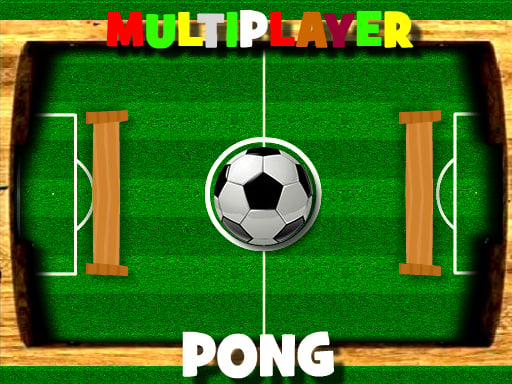 Loads instantly · Free · No install
About Multiplayer Pong Time
Multiplayer Pong Time is pong with a real person on the other end. You type a nickname, wait a few seconds for the matchmaker to find an opponent, and then it is just the two of you and a ball — no upgrades, no unlocks, nothing to learn.
The reason it holds up is that a live opponent behaves nothing like an AI paddle: they get tired, they overcommit, and they fall for the same feint twice. It suits every age group and runs on anything with a browser.
How to play
Type a nickname, then wait while the game matches you with a live opponent. Move your paddle with the mouse or by tapping and dragging on touch — the paddle tracks your pointer. Return the ball past your opponent to score, and try not to be caught out of position when it comes back faster.
Controls
- Mouse — move your paddle
- Touch — drag to move on mobile
Tips to win
- Return to the centre of your side between shots; most points are lost to position, not speed.
- Hit the ball off the edge of your paddle to steepen its angle and stretch your opponent.
- Watch which side your opponent drifts to — live players have habits an AI never would.
Multiplayer Pong Time strategy guide
Pick a nickname, then wait for a real opponent. This is pong against a live person rather than a computer, so the short pause after you enter a name is the game finding someone. Your paddle follows the pointer — mouse on a computer, a dragged finger on a touchscreen — and that is the entire control scheme. Everything difficult about the game is positional.
Return to the middle between shots. The single habit that separates players is what they do immediately after hitting the ball. Staying where your last return left you means every shot to the opposite side is out of reach. Drifting back toward centre costs nothing and halves the distance you need to cover for whatever comes next.
Where you strike the paddle decides the angle. Hitting with the middle of the paddle sends the ball back flat and predictable; catching it toward one end throws it off at an angle. Deliberately using the ends is how you make a human opponent run, and it is also how you accidentally send the ball somewhere you cannot recover from, so pick your moment.
The ball gets faster and your margin shrinks. Rallies speed up as they go on, which means the reaction-based play that works in the first few exchanges stops working later. The fix is anticipation rather than speed: watch the angle as the ball leaves your opponent's paddle and start moving then, not when it crosses the halfway line.
A human opponent has patterns, so look for them. Unlike a CPU, the person on the other side has habits — a favourite side, a tendency to drift after a winner, a panic when the ball comes fast down the middle. Two or three rallies is usually enough to spot one. Playing to that weakness wins more points than trying to out-reflex somebody, and it is the reason the multiplayer version is worth playing over a solo one.
Multiplayer Pong Time FAQ
How do you play Multiplayer Pong Time?
Enter a nickname, wait to be matched with a live opponent, then move your paddle with the mouse or by dragging on a touchscreen.
Can two people play on the same keyboard?
No — this version matches you with an opponent online rather than sharing one device. For same-keyboard games, see the two-player category on this site.
How do you score a point in Multiplayer Pong Time?
You score by returning the ball past your opponent's paddle. Your own paddle follows your pointer, the mouse on a computer or a dragged finger on a touchscreen, so the aim is to keep the ball in play on your side while placing returns where the other player cannot reach them.
Why is there a wait after entering a nickname in Multiplayer Pong Time?
After you type a nickname, the game looks for a live opponent to match you with, and the match starts once one is found. That short pause is the matchmaking step, and it is the reason your rival is a real person rather than a computer-controlled paddle.