The Moto X3M Games Compared: Original, Winter, Pool Party and Halloween
There are four Moto X3M games in our racing section, and at a glance they look like reskins of one another: the same side-on bike, the same rider who comes off at the slightest excuse, the same timer in the corner. They are close relatives, but they are not identical, and the differences are the kind that matter the moment you sit down — which keys restart a level, whether WASD works at all, and whether a level rewards speed or patience.
This page puts the four side by side. Everything quoted about controls comes from the control reference on each game's own page, and each of those references is matched against the developer's listing using the game's distribution ID, the 32-character code the game is actually served from. Where one of the four has a detail the others do not list, we say so rather than assume it carries over.
The four games at a glance
| Game | Theme | Keys listed on its page | Recovery key |
|---|---|---|---|
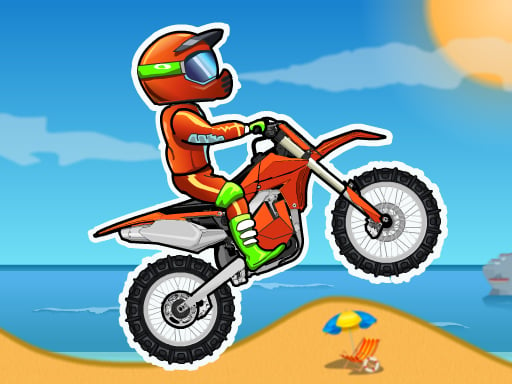
| Moto X3M Original | The first game: saw blades, explosives, collapsing bridges, loops | Up / Down to drive, Left / Right to balance and tilt | Space — respawn at the last checkpoint |
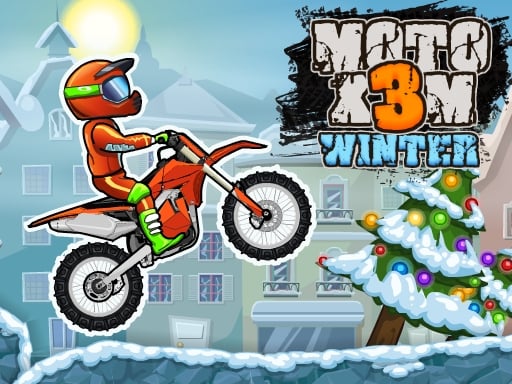
| Moto X3M Winter | Snow tracks with ramps, swinging traps and explosives | Up to accelerate, Down to brake or reverse, Left / Right to rotate in the air | None listed — a bad landing restarts you at the last checkpoint |
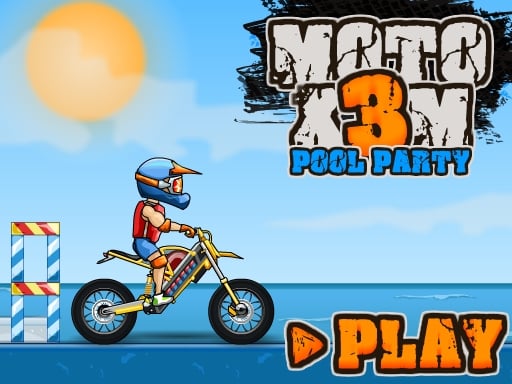
| Moto X3M Pool Party | Summer and poolside; also called Moto X3M 5 Pool Party | Up to accelerate, Down to brake, Left / Right to tilt and rotate | None listed |
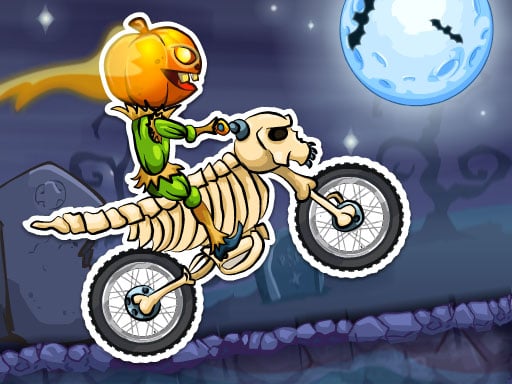
| Moto X3M Halloween | Graveyards, coffins and pumpkin traps; also called Spooky Land | Up or W, Down or S, Left / Right or A / D | R — restart the level |
Three things stand out from that table. First, all four run on the arrow keys, so anyone who has played one can start another without reading anything. Second, Halloween is the only one of the four whose listing also accepts WASD, which matters if you are on a laptop where the arrow keys are small or awkward. Third, the recovery key is different in every game that has one: Space in the Original, R in Halloween. Players who move between the games tend to press the wrong one at least once.
What stays the same across the series
The core of Moto X3M does not change between entries. Each level is a hand-built obstacle course viewed from the side, and your opponent is the clock rather than another rider. You control throttle and brake with Up and Down, and the rotation of the bike with Left and Right. The rotation keys do two jobs: on the ground they shift the rider's weight, and in the air they spin the bike, which is how you line up a landing and how you perform a flip.
Flips are the series' central idea. On the Original and Winter pages, landed front and back flips knock seconds off your finishing time, and the time decides your star rating. That turns every jump into a choice: the safe line keeps you on the bike, the fast line asks you to spend airtime you do not strictly need. The game only pays out for flips you land; a flip that ends with the rider's head in the ground costs you a restart instead.
Landing is the other constant. In every entry the run survives only if the bike comes down on its wheels. Winter's page is explicit that any angle which puts the rider into the ground sends you back to the last checkpoint. The practical rule that follows is the same in all four games: before the ground arrives, stop spinning and get the wheels level with the slope you are about to land on.
Where each game is different
Moto X3M Original — the reference point
The Original is the one to learn on. Its page lists 25 levels, the traps include saw blades, explosives, collapsing bridges and loops, and it has the clearest safety net of the four: Space respawns you at the last checkpoint whenever a section goes wrong. That makes it forgiving for a first-timer, because a mistake in a long level does not throw away the progress before it. Most of the habits the later games assume — levelling the bike before every landing, learning a trap by dying on it once — are easiest to pick up here.
Moto X3M Winter — the brake matters more
Winter's listing gives Down a second job: brake or reverse. That sounds minor, but it changes how you approach jumps. The tip on the Winter page is to brake before a ramp's lip rather than after it, because approach speed decides where the whole jump lands. Winter also spells out a reward the others only imply: stars unlock new riders, which gives you a reason to replay a level you have already finished.
Moto X3M Pool Party — the easiest to hand to someone new
Pool Party describes itself as Moto X3M 5 Pool Party, a special summer version of the series. Its controls are the plainest of the four — Up, Down, and Left / Right to tilt and rotate — and its page does not list a separate restart key. Because everything happens on four arrow keys, it is a sensible one to show a younger player, with one warning taken from its own tips: only tilt when you have height to spare, since a half-rotation landing ends the run.
Moto X3M Halloween — patience beats speed
Halloween, also listed as Spooky Land, is the entry where raw speed helps least. Several of its props move on their own timing, so a jump that clears on one attempt fails on the next unless you reach it at the same moment in the trap's cycle. Its page recommends waiting a beat before a moving trap rather than trying to outrun it, and when a level keeps killing you in the same place, deliberately arriving slower once to watch the cycle. It is also the only one with an R key to restart the whole level and the only one that accepts WASD.
Which one to play first
If you have never played the series, start with Moto X3M Original: the checkpoint respawn on Space keeps the early frustration low, and everything it teaches carries straight into the other three. If you are playing on a small laptop keyboard and the arrow keys are cramped, go to Moto X3M Halloween, since it is the one that lists W, A, S and D as alternatives. If you want the most straightforward controls to hand to someone else, pick Pool Party. And once you are comfortable chasing three-star times, Winter is where braking before a jump starts to matter as much as speed.
Common mistakes that carry across all four
- Spinning until the last moment. The rotation keys keep turning the bike for as long as you hold them. Let go early enough to settle the angle before touchdown.
- Chasing every flip on a first run. A flip is only worth time if you land it. Ride a new level cleanly once, learn where the long jumps are, then add flips where the landing is flat and predictable.
- Racing a moving trap. This is most costly in Halloween, but every entry has timed obstacles. Losing half a second waiting is cheaper than a restart.
- Pressing the wrong recovery key. Space respawns in the Original; R restarts the level in Halloween. Check which game you are in before reaching for either.
- Limping on after a bad start. The Pool Party page puts it simply: restart on a bad start, because a clean run is always faster than a recovered one.
Can two people play Moto X3M?
None of the four is a two-player game — every one of them is a single rider against the clock. The Winter page suggests the one arrangement that works well for two people: take turns on the same level and compare finishing times. Because the timer is the only opponent, that is a fair contest, and it is a good way to teach the flip-for-time idea to someone new. If you want two people playing at once on one keyboard, our two-player, one-keyboard list is the better starting point.
How this page was put together
We did not rate or rank these games by playing them, and we are not claiming lap times. What this page does is line up facts that are already on the four game pages — the controls, the theme, the recovery keys and the specific tips — after those facts were checked against the developer's listing for each game's distribution ID. Each embed was also re-checked from a server in the United States on the date shown at the top. If a game in the series changes, its entry here will be updated when its page is.